Many people hear "Fiber Optics" and immediately think of high-speed internet. But in reality, this technology is playing a much bigger role — especially in healthcare. From minimally invasive surgeries to real-time patient monitoring, fiber optics along with AI are paving the way for precision medicine, accurate diagnosis, and better patient outcomes.
What is Fiber Optics?
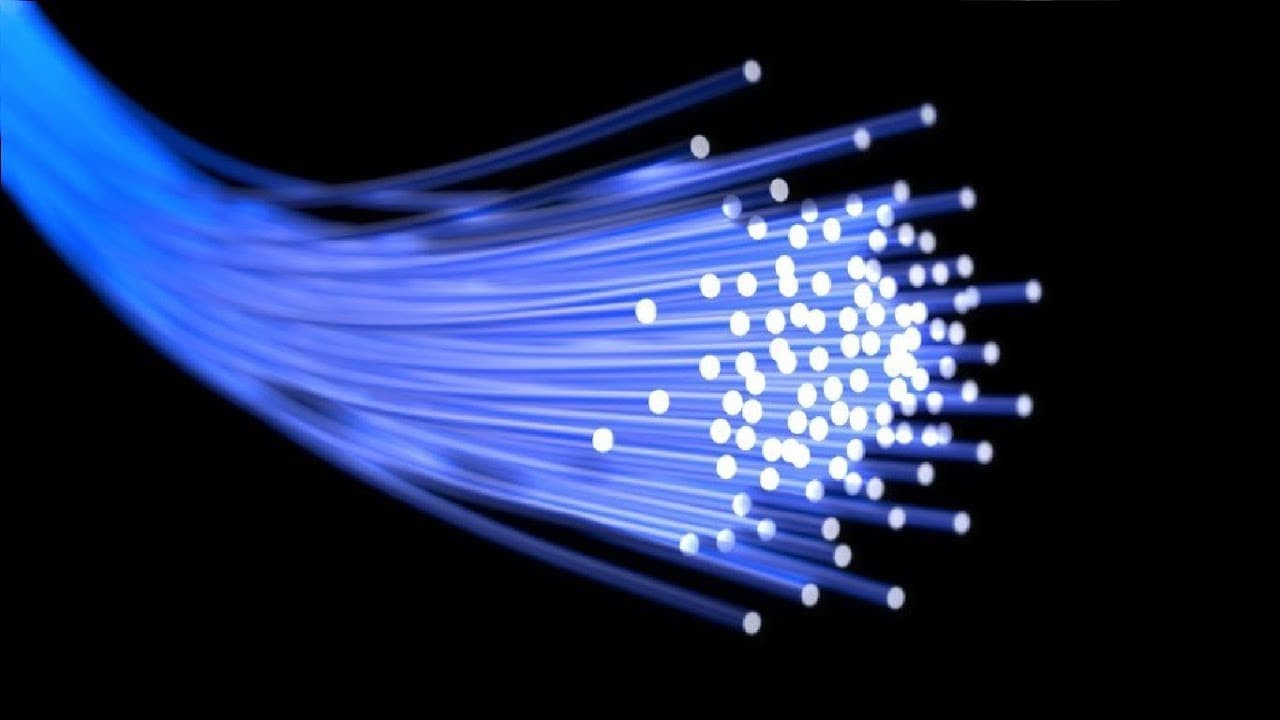
Fiber optics is a technology that uses thin strands of glass or plastic to transmit light signals. These fibers work on a principle called total internal reflection, allowing light to travel long distances with very little loss. They are lightweight, flexible, and precise — making them ideal for medical applications.

Why Fiber Optics Matter in Healthcare?
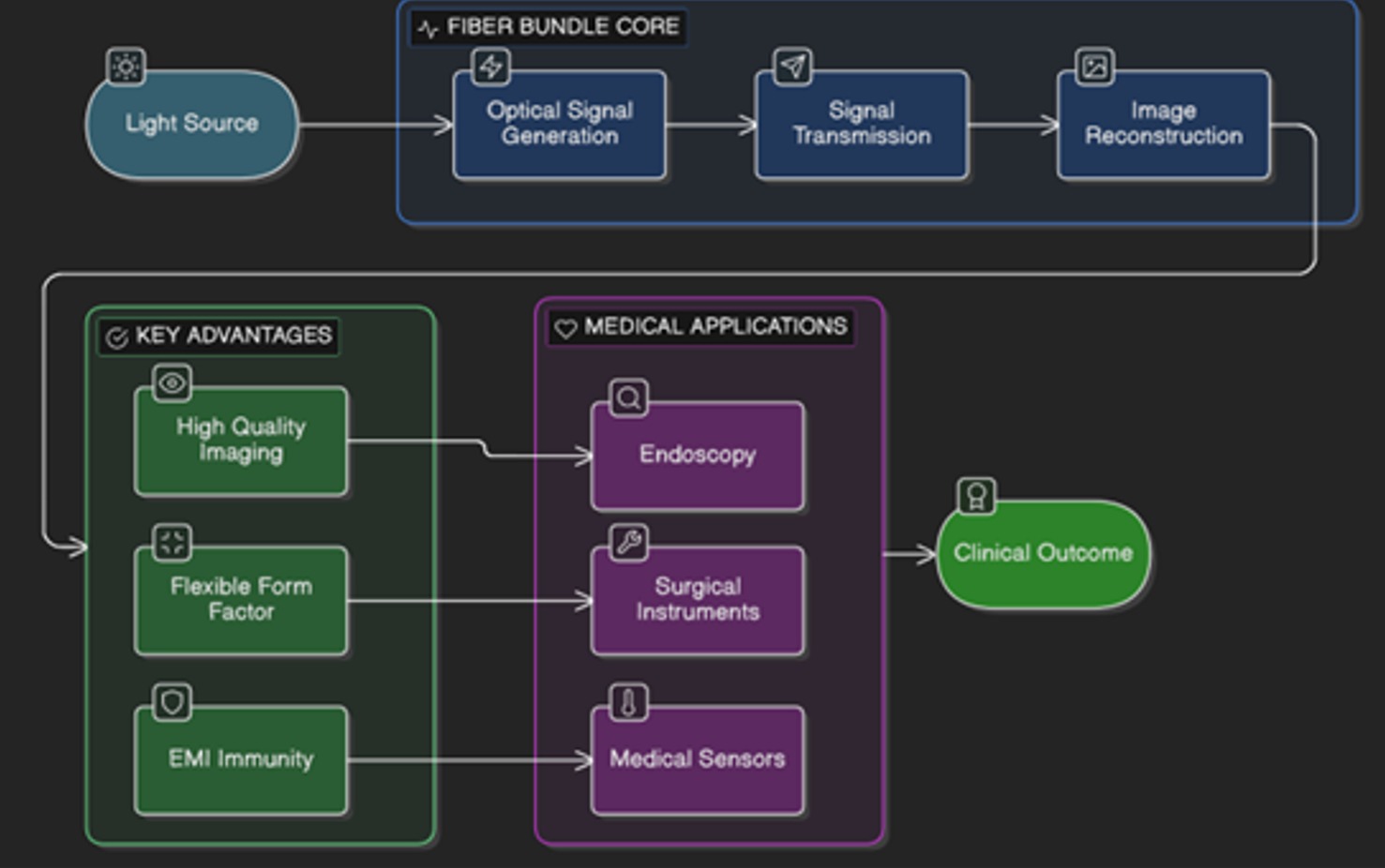
Here's why fiber optics are a game-changer for the medical world:
- High-Quality Imaging — Fiber bundles can capture and transmit images with minimal loss, enhancing diagnostic accuracy.
- Minimally Invasive Procedures — Thinner, more flexible scopes and instruments enable smaller incisions and faster recovery.
- Reduced EMI — Optical signals are immune to electromagnetic interference, enhancing reliability in busy hospital environments.
- Versatile Application Range — From endoscopy to sensors, fiber optics supports a wide spectrum of medical uses.
Examples of Fiber Optics in Healthcare
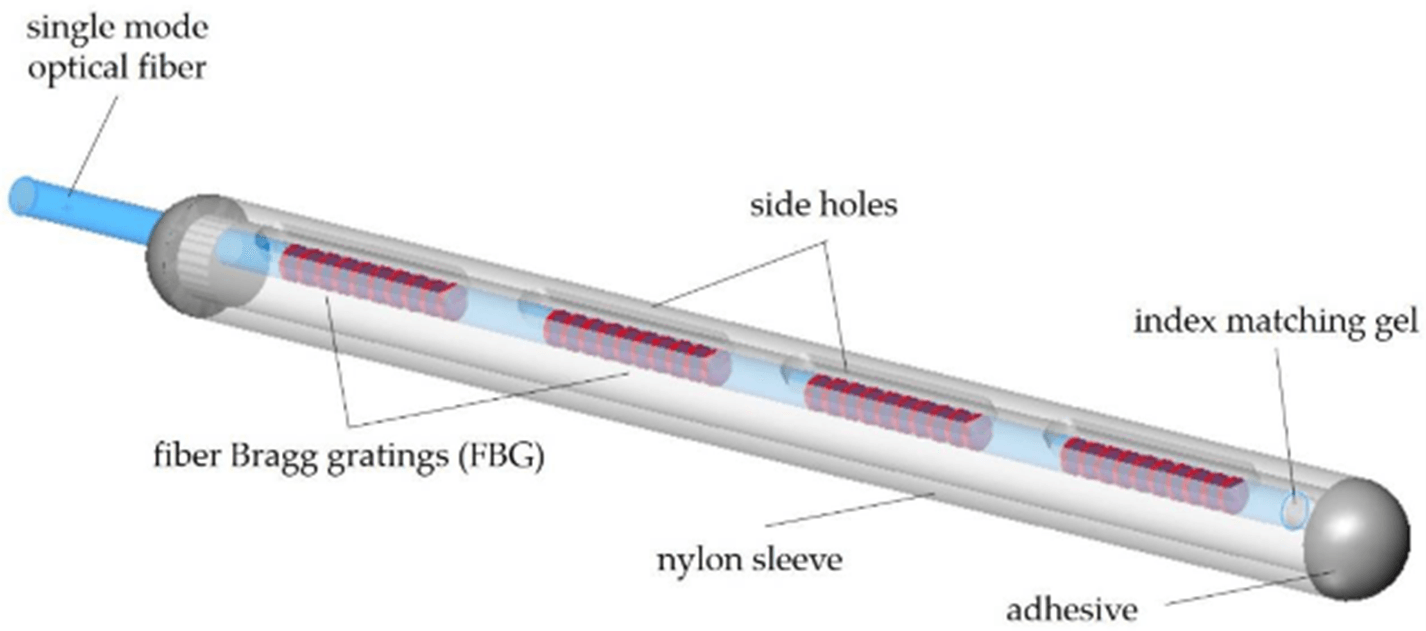
The flexible yet rigid multifibre bundles enable visualization of internal organs and tissue via bodily orifices — allowing doctors to examine the digestive tract, lungs, and more without open surgery.
Fiber Optics And AI Together
Though fiber optics is a powerful tool in its own right, it is highly sensitive to physical parameters like strain and temperature — making it difficult to interpret signals in real-time medical settings. This is where AI steps in to make fiber optics smarter and more reliable.
Fiber optic sensors generate enormous amounts of complex optical data. AI is the key that unlocks this data — interpreting it instantly, filtering noise, and adapting in real time.
Smarter Signal Processing
AI interprets complex optical signals instantly, eliminating the need for slow, step-by-step calculations. What would take minutes is done in milliseconds.
Noise Reduction & Accuracy
Neural networks filter out environmental noise (like changes in pressure) and overlapping effects (like temperature vs. strain) to provide reliable, accurate measurements.
Adaptive Sensing
AI can tune sensors in real time, predict anomalies before they become critical, and dynamically adjust to changing patient conditions.
Real World Impact
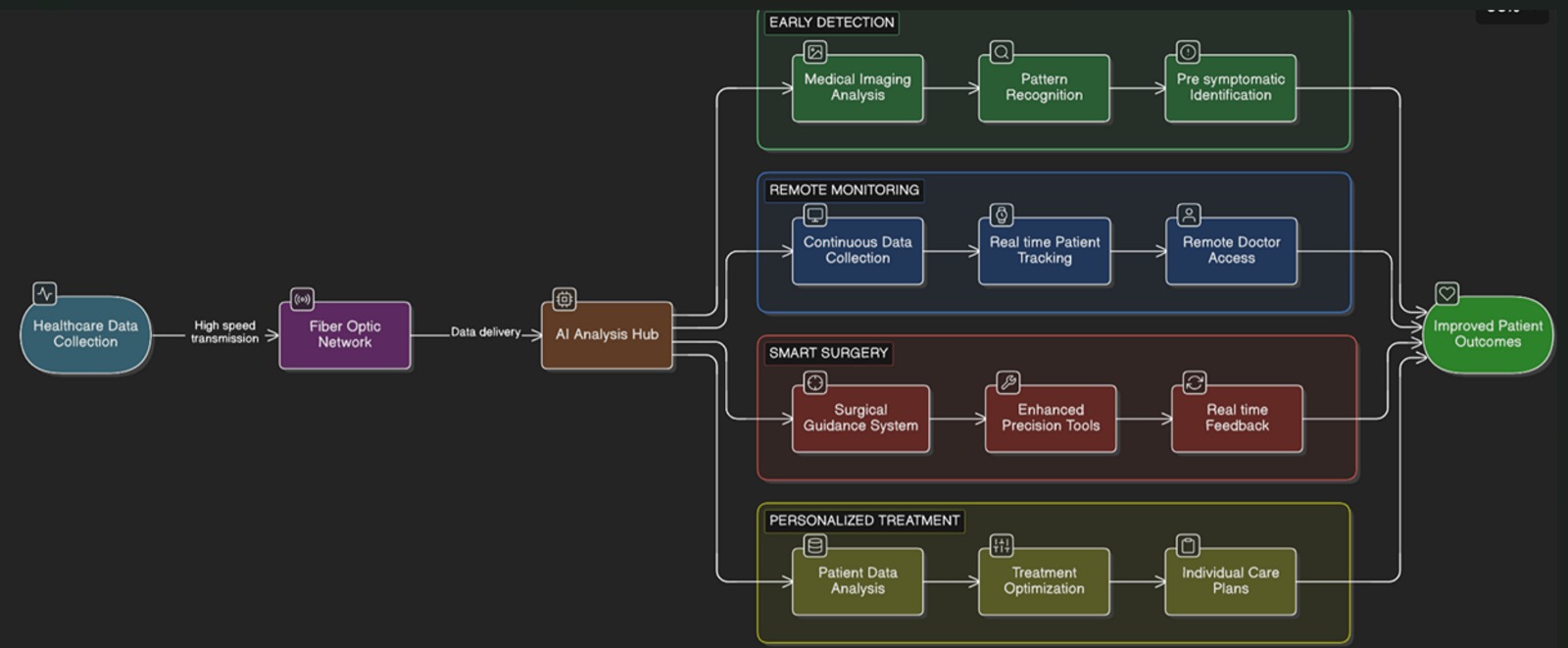
The combination of fiber optics and AI is already transforming healthcare in four key ways:
Early Disease Detection
AI can analyze high-resolution imaging data collected through fiber optic systems to identify patterns and abnormalities even before symptoms appear. This enables earlier diagnosis and significantly increases the chances of successful treatment.
Remote Patient Monitoring
Fiber optic sensors continuously collect patient data, while AI processes it in real time. This allows doctors to monitor patients from anywhere — ensuring timely intervention and reducing the need for frequent hospital visits.
Smart Surgical Systems
Surgeons can use fiber optic tools combined with AI guidance to perform procedures with enhanced precision. Real-time data and insights help reduce risks, improve accuracy, and lead to better surgical outcomes.
Personalized Treatment Plans
By analyzing large amounts of patient data, AI can help design treatments tailored to individual needs — improving effectiveness and ensuring patients receive more targeted care.
Benefits And Challenges
High Accuracy in Diagnosis — AI improves the interpretation of fiber optic data, helping reduce errors and enabling early detection of diseases.
Better Patient Outcomes — Faster diagnosis and targeted treatments lead to improved recovery and overall healthcare quality.
Minimally Invasive Procedures — Reduced trauma, less pain, and quicker recovery times for patients.
While the potential is enormous, widespread adoption will require investment in both technology and training — as well as strong data governance frameworks to protect patient privacy.
Conclusion
By combining precise data collection with intelligent analysis, fiber optics and AI are shaping a future where healthcare is more proactive, personalized, and accessible. What was once the stuff of science fiction — a doctor monitoring a patient's vitals remotely, or AI catching a tumour before a patient feels any pain — is quickly becoming everyday reality.
The fusion of photonics and AI isn't just an upgrade to existing tools — it's a fundamental shift in how medicine is practiced.